
Your Garage Door Springs Are Doing More Work Than You Think
Every time you open or close your garage door, the springs are doing the heavy lifting — literally. A standard two-car garage door can weigh between 150 and 250 pounds, and the springs are responsible for counterbalancing all of that weight. Your garage door opener isn't muscling the door up and down on its own. Without properly functioning springs, that opener would burn out in no time.
Yet most homeowners in Charlotte never think about their garage door springs until one snaps — usually at the worst possible moment. A broken spring can leave your car trapped inside, create a serious safety hazard, and lead to an emergency repair call that could have been avoided with a little proactive attention.
So how often should you replace your garage door springs? Let's break it down.
Understanding the Two Types of Garage Door Springs
Before we talk about replacement timelines, it helps to know what kind of springs your garage door uses. There are two main types:
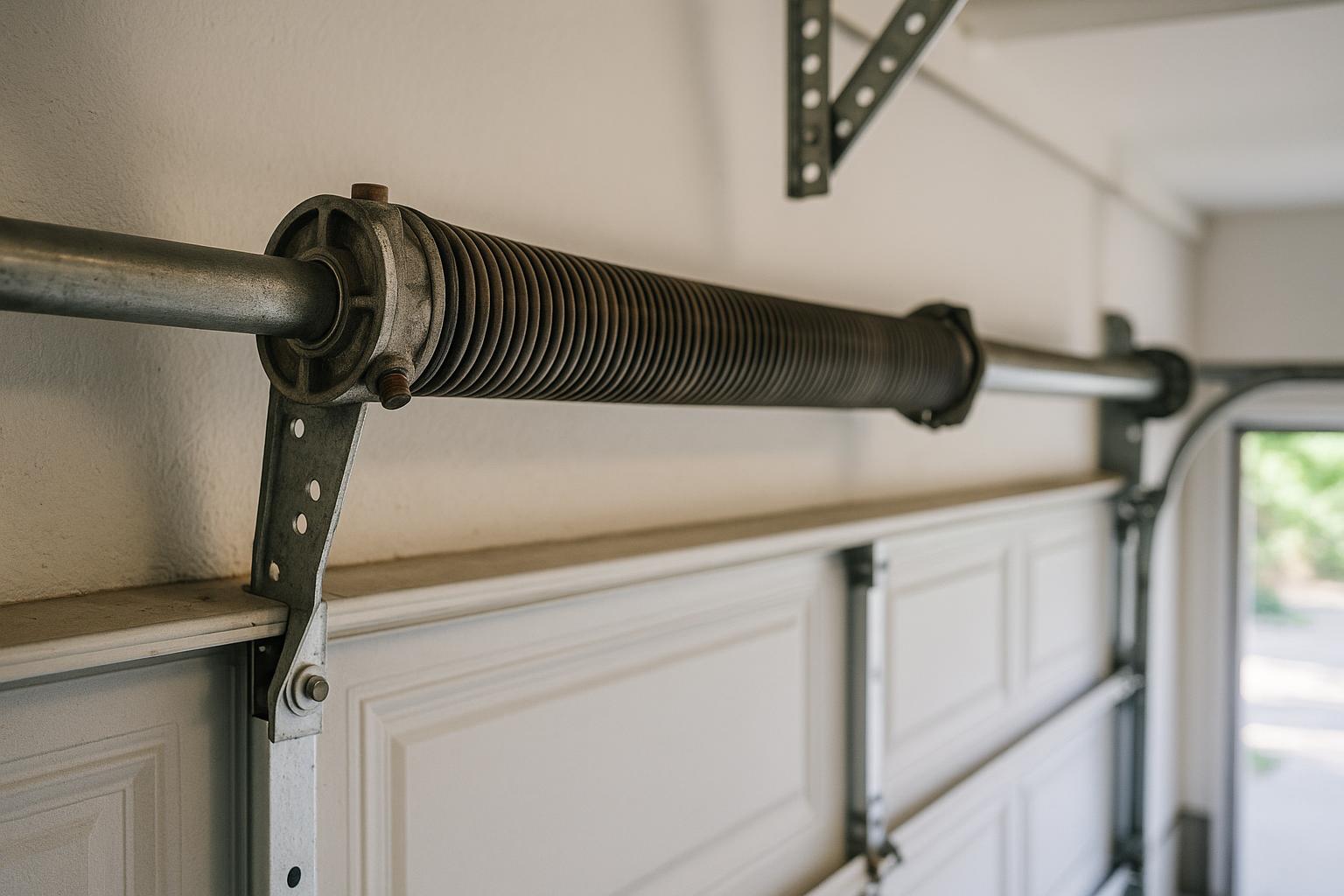
- Torsion springs — These are mounted on a metal shaft above the garage door opening. They twist and unwind to raise and lower the door. Torsion springs are the more common type on modern residential garage doors in the Charlotte area.
- Extension springs — These run along the horizontal tracks on both sides of the door. They stretch and contract to provide lifting force. Extension springs are more common on older or lighter doors.
Both types wear out over time, but they have different lifespans and failure characteristics. Knowing which type you have can help you plan for replacement before a break catches you off guard.
How Long Do Garage Door Springs Last?
Garage door springs are rated by cycle life. One cycle equals one full open-and-close of the door. Here's what you can typically expect:
- Standard torsion springs: approximately 10,000 cycles
- High-cycle torsion springs: 25,000 to 50,000 cycles or more
- Extension springs: approximately 10,000 cycles
Now, how does that translate to years? It depends on how often you use your garage door. If your household opens and closes the door four times a day — a pretty common number for families in neighborhoods across Matthews, Mint Hill, and Huntersville — that's roughly 1,460 cycles per year. With standard springs, you're looking at a lifespan of about seven years.
If you work from home and the garage door sees less traffic, your springs might last a decade. If you have teenagers coming and going at all hours, that lifespan could shrink to five or six years.
Warning Signs Your Springs Are Wearing Out
Springs rarely fail without warning. Here are the signs Charlotte homeowners should watch for:
The Door Feels Heavier Than Usual
Try disconnecting the opener by pulling the emergency release cord, then manually lift the door. A properly balanced door should feel relatively light and stay open about three or four feet off the ground. If the door feels extremely heavy or slams down when you let go, the springs are losing tension.
The Door Opens Unevenly
If one side of the door rises faster than the other, or if the door looks crooked during operation, it could indicate that one spring is weaker than its counterpart. This is especially common with extension spring systems.
Visible Wear or Gaps in the Spring Coils
Take a look at your torsion springs from inside the garage. If you notice gaps between the coils, visible rust, or stretched-out sections, the spring is nearing the end of its life. Rust is particularly worth watching in the Charlotte climate, where humidity can accelerate corrosion.
Loud Bang From the Garage
If you hear a loud bang coming from your garage when no one is in there, a spring may have already broken. A snapping torsion spring releases a tremendous amount of stored energy and makes a sound that's hard to miss. Do not attempt to operate the door if this happens — call a professional immediately.
The Opener Struggles or Stops Mid-Cycle
When springs weaken, the opener has to work harder to move the door. You might notice the motor straining, the door moving slower than normal, or the opener stopping partway through a cycle. Continuing to use the door in this condition can damage the opener motor.
Should You Replace Springs Proactively?
Absolutely. Waiting for a spring to break is like waiting for a tire to blow out on I-485 during rush hour — it's going to happen at the most inconvenient time, and the consequences are worse than a planned replacement.
Here's our recommendation: if your garage door springs are approaching the seven-year mark with regular daily use, have them inspected by a professional. A trained technician can assess the remaining life of the springs and recommend whether it's time to replace them.
Proactive replacement also gives you the option to upgrade to high-cycle springs, which can last two to three times longer than standard springs. The upfront cost is slightly higher, but many homeowners in Concord, Indian Trail, and across the Charlotte metro find that the long-term value and peace of mind are well worth it.
Why You Should Never Replace Garage Door Springs Yourself
We understand the DIY spirit — Charlotte is full of capable, handy homeowners. But garage door springs are one of the few home repair jobs where we strongly advise against doing it yourself. Here's why:
- Extreme tension: Torsion springs are wound under tremendous force. A spring that slips during installation can cause severe injury or even death.
- Specialized tools required: Proper spring replacement requires winding bars, a precise understanding of spring calculations, and experience handling high-tension hardware.
- Incorrect installation risks: A spring that's the wrong size or wound to the wrong tension can damage your door, your opener, or both — and it can fail again quickly.
This is a job where the cost of professional service is a small price to pay for safety and a correct installation that lasts.
What to Expect During a Professional Spring Replacement
When you call Charlotte Garage Door Service for a spring replacement, here's what the process typically looks like:
- We inspect the entire door system — springs, cables, rollers, hinges, and opener — to get a complete picture of the door's condition.
- We explain exactly what needs to be replaced and why, along with your options for standard or high-cycle springs.
- We replace the springs, rebalance the door, and test the entire system to make sure everything operates smoothly and safely.
- We lubricate all moving parts and make any minor adjustments needed to extend the life of the new springs and the rest of the hardware.
The whole process usually takes about an hour, and most homeowners are surprised at how affordable it is compared to the emergency alternative.
Don't Wait for the Snap
Your garage door springs are one of the hardest-working components on your home, and they have a finite lifespan. If your springs are getting up there in age, or if you've noticed any of the warning signs we described, it's worth scheduling an inspection sooner rather than later.
Charlotte Garage Door Service helps homeowners across Charlotte, Mint Hill, Matthews, Concord, Huntersville, and Indian Trail stay ahead of spring failures with honest assessments and reliable repairs. Give us a call, and we'll let you know exactly where your springs stand — no pressure, no surprises.