
Your Garage Door Shouldn't Sound Like That
You press the button, and instead of a smooth, quiet ride up the track, your garage door groans, squeals, or rattles loud enough to wake the neighbors. If you've been ignoring strange garage door noises and hoping they'll go away on their own, you're not alone — but you might be setting yourself up for a bigger, more expensive problem down the road.
A noisy garage door is more than just an annoyance. In many cases, it's an early warning sign that something is wearing out, misaligned, or about to fail. Here in Charlotte, where homeowners use their garage doors multiple times a day — often as the primary entry point to the house — catching these issues early can save you time, money, and a lot of frustration.
Let's break down the most common garage door noises, what causes them, and when it's time to call a professional.
Grinding Noises: Metal on Metal Is Never Good
A grinding sound usually points to a lubrication problem or worn-out components. Your garage door system has dozens of moving metal parts — rollers, hinges, tracks, and springs — and when they lose lubrication, they start grinding against each other.
Common causes of grinding include:
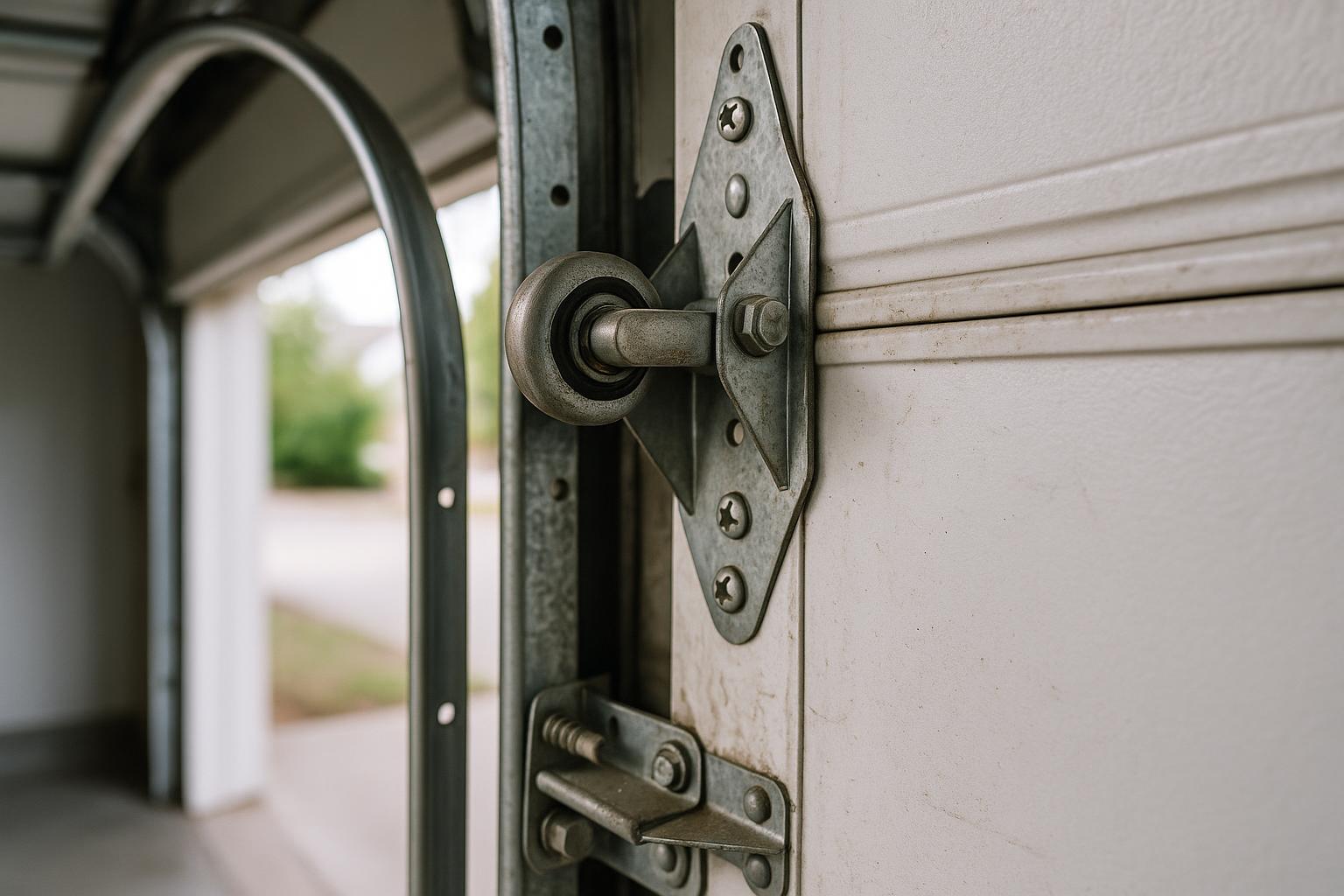
- Dry or worn rollers — Steel rollers without lubrication are one of the most frequent culprits. Nylon rollers are quieter and require less maintenance, making them a popular upgrade for Charlotte homeowners.
- Lack of regular lubrication — All moving parts need periodic lubrication with a garage door-specific lubricant (not WD-40, which is a solvent, not a long-term lubricant).
- Opener gear wear — If the grinding seems to come from the motor unit itself, the internal gears in your garage door opener may be stripping out.
If a fresh application of proper lubricant doesn't resolve the grinding, it's time to have the system inspected before a part fails completely.
Squealing or Screeching: High-Pitched and Hard to Ignore
A high-pitched squeal when your door moves is typically caused by friction somewhere in the system. This is your garage door's way of begging for attention.
The usual suspects include:
- Worn torsion spring coils — As springs age, the coils can rub against each other and produce a squealing noise, especially during opening.
- Misaligned tracks — If the metal tracks that guide your door aren't perfectly parallel, the rollers scrape against the sides as they travel, creating that unmistakable screech.
- Rusted or binding hinges — Hinges that have corroded or lost their range of motion will protest loudly every time the door bends at a panel joint.
Track misalignment in particular is something you don't want to ignore. A door that jumps or binds in the track can eventually come off entirely, which is both a safety hazard and an expensive emergency repair.
Rattling and Vibrating: Something Is Loose
A rattling garage door often means hardware has loosened over time. This is extremely common — your garage door cycles up and down over a thousand times a year, and all that vibration gradually loosens nuts, bolts, and brackets.
Check for these issues:
- Loose track brackets — The brackets that secure the track to the wall and ceiling can work themselves loose.
- Worn chain or belt — If you have a chain-drive opener, a loose chain will slap and rattle during operation. Belt-drive openers are inherently quieter, which is one reason many homeowners in Charlotte neighborhoods choose them when upgrading.
- Loose opener mounting — The opener unit itself can vibrate against the ceiling if its mounting hardware has loosened.
Tightening hardware is a relatively simple maintenance task, but if you're unsure which bolts are safe to adjust — especially around the springs and cables — it's best to let a technician handle it.
Banging or Popping: Don't Ignore This One
A loud bang or pop is the noise that should concern you most. It can indicate:
- A broken torsion spring — When a torsion spring snaps, it produces a loud bang that many homeowners mistake for something falling in the garage. If your door won't open after hearing this sound, a broken spring is almost certainly the cause.
- Panel damage or warping — A popping sound during operation can mean a panel is bending or flexing beyond its normal range, often due to damaged hinges or an unbalanced door.
- Opener force issues — If the opener is working harder than it should to move the door — because of a balance problem, worn springs, or track obstruction — it can produce banging sounds as it strains against the resistance.
A sudden loud bang followed by the door refusing to operate is a situation where you should stop using the door immediately and call for professional service. Attempting to force a door open with a broken spring or cable is dangerous.
When Noise Means It's Time for an Upgrade
Sometimes a noisy garage door isn't broken — it's just old. If your door and opener are 15 to 20 years old and you've been dealing with increasing noise despite regular maintenance, it may be more cost-effective to invest in a new system rather than continuing to patch aging components.
Modern garage doors and openers are significantly quieter than models from even a decade ago. Belt-drive openers, insulated steel doors, and nylon rollers can transform a loud, clunky garage door into one you barely notice — something your family and your neighbors in Charlotte will appreciate, especially during early morning departures.
Simple Maintenance That Keeps Things Quiet
Many noise issues can be prevented or delayed with basic maintenance performed once or twice a year:
- Lubricate all moving parts — Apply a silicone-based or lithium-based garage door lubricant to springs, rollers, hinges, and the track. Do this every six months.
- Tighten hardware — Go over all visible nuts and bolts with a socket wrench. Don't adjust anything connected to the spring system.
- Inspect rollers — Look for cracks, chips, or flat spots. Worn rollers should be replaced promptly.
- Check the balance — Disconnect the opener and manually lift the door halfway. If it doesn't stay in place, the springs may need adjustment — a job for a trained technician.
- Listen and observe — Pay attention to new or changing sounds. Catching a problem early is always cheaper than dealing with a failure.
When to Call a Professional in Charlotte
Some garage door maintenance is safe for homeowners to handle. Lubrication, tightening bolts, and visual inspections are all fair game. But anything involving springs, cables, tracks, or the opener's internal components should be left to a professional.
At Charlotte Garage Door Service, we help homeowners across Charlotte, Mint Hill, Matthews, Huntersville, Concord, and Indian Trail diagnose and fix noisy garage doors every week. Whether it's a simple roller replacement or a full system overhaul, we show up on time, explain exactly what's going on, and get it fixed right the first time.
If your garage door has been making sounds that don't seem right, don't wait for a small problem to become a big one. Give us a call, and we'll help you get back to a smooth, quiet door you can count on.