
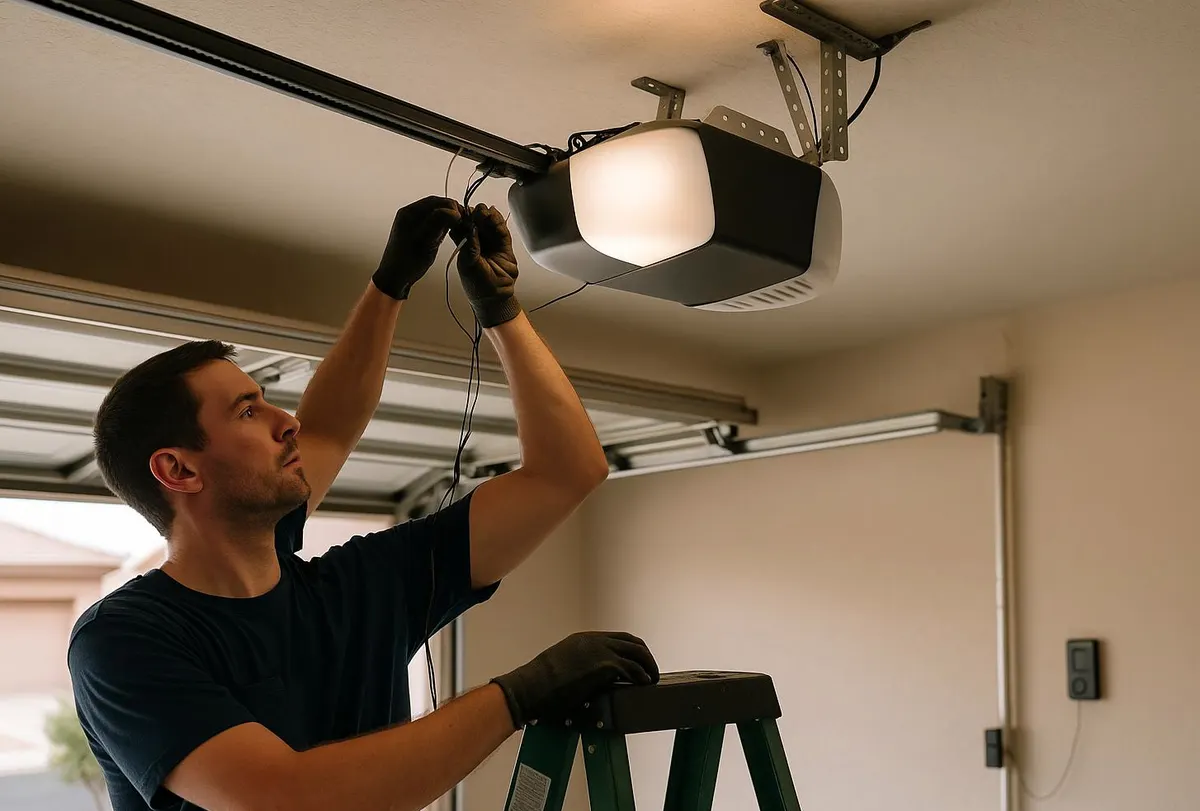
What a Technician Sees After a Windstorm
The calls usually come in the morning after a rough night. A homeowner walks out to find the garage door bowed inward like a sail, one or two panels buckled, and the track pulled away from the wall on one side. Sometimes the door is still technically closed, but it's sitting crooked in the opening, and water has pushed in under the bottom seal and soaked a few feet of the garage floor. In a few cases, the door has actually come off the track entirely and is leaning against the car.
None of this is really about the door being old or cheap. It's about wind pressure finding the one part of the house built to swing open, and nothing stopping it once it starts to flex.
Why the Garage Door Fails Before Anything Else
A garage door is the largest moving opening in most homes, and it's built to handle vertical weight — the pull of springs lifting panels up and down. It is not naturally built to resist sideways pressure pushing straight at it. When wind hits a closed garage door, the door has to transfer that force through its tracks, rollers, and the opener or a lock bar into the framing around the opening. If any of those connection points are weak, rusted, or just not rated for the load, the door flexes, then bows, then tears away from the track.
Once a garage door fails, wind gets inside the structure. Air pressure inside the garage pushes up against the roof decking and out against the walls, which is part of why garage door failure shows up so often in roof damage stories after a storm. The door isn't just a door at that point — it's the weak point in the whole building envelope.
Why This Matters Right Now in the Charlotte Area
Fall in this part of North Carolina means a stretch of fast-moving fronts, heavy rain bands, and occasional remnants of tropical systems that have weakened over land but still carry strong, gusty wind well inland. These storms don't always come with much warning, and the wind often arrives sideways along with the rain, which is exactly the load a garage door handles worst. Add in the humidity that's been sitting on hardware all summer, and any rust on tracks, hinges, or roller brackets makes the door that much more likely to give way under pressure.
Before the Next Line of Storms Moves Through
Check the Hardware That Actually Holds the Door in Place
- Tracks: Look for rust, loose bolts, or gaps where the track has started to pull away from the wall.
- Rollers and hinges: Worn or rusted rollers let the door shift more than it should under pressure. Replace anything that looks pitted or cracked.
- Struts: Horizontal reinforcement struts across the back of the panels add real resistance to wind pressure. Many older doors don't have them installed at all.
Check What Keeps Water Out
- Bottom seal and weatherstripping: Cracked or flattened seals let wind-driven rain push straight under the door. This is a common source of soaked garage floors and water creeping toward stored items or electrical panels.
- Panel condition: Wood or composite panels that have absorbed moisture over a humid summer can delaminate or soften, which makes them weaker exactly when wind pressure is highest.
Check How the Door Is Secured When You're Not Home
- Manual lock bar: If the door has one, use it when you'll be away during a forecast storm. It adds a second point of resistance beyond the opener.
- Opener battery backup: Power often goes out before or during a strong line of storms. A battery backup keeps the door operable so you're not stuck manually wrestling with it in the wind and rain.
During the Storm
Avoid opening and closing the door in high wind if you can help it — that's when a door is most likely to catch a gust mid-motion and get pulled off track. If the forecast calls for sustained high wind, park a vehicle close behind the door on the inside. It won't stop a serious failure, but it can keep a bowing door from swinging all the way in.
After the Storm Passes
Walk the door before you run it. Look for bent track sections, panels that no longer sit flush, gaps at the bottom where the seal has pulled loose, and any water staining on the garage floor or walls that suggests water pushed in during the storm. If the door is visibly crooked or the opener struggles and reverses partway through a cycle, stop using it and get it looked at before the next front comes through.
When to Call Charlotte Garage Door Service
If a storm has left your door bowed, off track, or struggling to seal properly, it's worth having it inspected before you rely on it again. Charlotte Garage Door Service handles both garage door repair for storm damage and garage door maintenance to catch rusted hardware or worn seals before the next line of weather rolls through. For doors without reinforcement struts or a battery-backup opener, we can also talk through options as part of a garage door installation or opener upgrade built for what this area's weather actually throws at it.
If your garage door took a hit this fall or you want it checked before the next storm, call Charlotte Garage Door Service — we serve homeowners throughout Charlotte, NC and the surrounding area.