
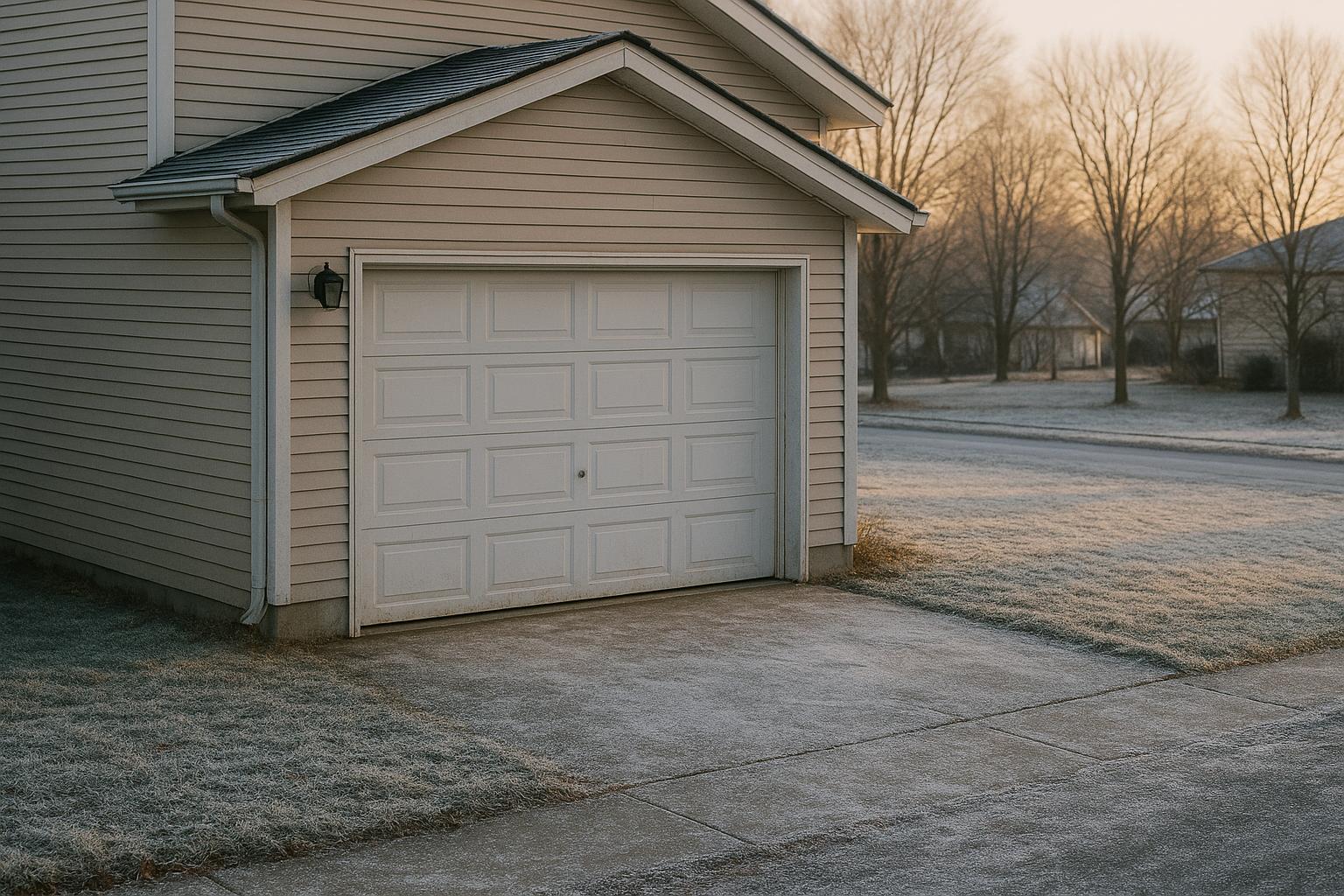
Why Cold Weather Causes Garage Door Problems in Charlotte
Charlotte doesn't get the brutal winters that cities further north experience, but that doesn't mean our garage doors are immune to cold weather issues. When temperatures dip into the 20s and 30s — which happens more often than many residents expect between December and February — garage doors can become sluggish, noisy, or completely unresponsive.
If you've ever pressed your garage door opener on a freezing morning only to hear the motor strain while the door stays put, you know how frustrating it can be. The good news is that most cold-weather garage door problems have straightforward causes and solutions. Here's what you need to know to keep your garage door working reliably all winter long.
Common Reasons Your Garage Door Won't Open in the Cold
1. Thickened or Dried-Out Lubricant
The lubricant on your garage door's moving parts — including the rollers, hinges, tracks, and springs — can thicken significantly in cold temperatures. When grease becomes stiff, it creates resistance that makes it harder for your opener to lift the door. In some cases, old lubricant that has dried out over the summer and fall finally causes noticeable problems once cold air makes everything contract and stiffen.
The fix: Apply a silicone-based garage door lubricant to all moving parts. Avoid using WD-40 as a long-term lubricant — it's a solvent, not a true lubricant, and it can actually strip away the protective coating your parts need. A proper silicone or lithium-based spray designed for garage doors will keep things moving smoothly even when temperatures drop.
2. Contracted Metal Components
Metal contracts when it gets cold. This is basic physics, but it has real consequences for your garage door system. Springs lose some of their tension, tracks can shift slightly, and hardware connections can tighten in ways that create friction. The result is a door that feels heavier to the opener and may struggle to move or stop partway through its travel.
The fix: If your springs were already near the end of their lifespan, cold weather contraction might be the tipping point. A professional can assess whether your springs need adjustment or replacement. Trying to adjust torsion springs yourself is extremely dangerous and should always be left to a trained technician.
3. The Weatherstripping Is Stuck to the Ground
This is one of the most common cold-weather garage door issues in the Charlotte area. When moisture collects along the bottom seal of your garage door and temperatures drop below freezing overnight, the rubber weatherstripping can literally freeze to the concrete floor. When you try to open the door, the opener strains against the frozen seal, and the door either won't budge or the weatherstripping tears away from the bottom of the door.
The fix: Never force the door open if you suspect it's frozen to the ground. Instead, use a heat gun or hair dryer along the bottom edge to gently melt the ice. You can also carefully use a flat shovel or putty knife to break the ice seal without damaging the weatherstripping. To prevent this from happening again, apply a thin layer of silicone spray or cooking oil along the bottom seal before the next cold snap.
4. Misaligned or Dirty Safety Sensors
Your garage door's photo-eye sensors sit near the floor on either side of the door opening. In winter, they can be knocked out of alignment by snow shovels, holiday decorations, or stored items being shuffled around. They can also collect condensation or frost that blocks the infrared beam, which tells the opener that there's an obstruction and prevents the door from closing — or in some cases, from operating at all.
The fix: Wipe the sensor lenses with a clean, dry cloth. Check that both sensors are properly aligned by looking for a steady green light on each unit. If the lights are blinking or off, gently adjust the sensors until they're pointing directly at each other.
5. Dead or Weak Remote Batteries
This one isn't technically a cold-weather mechanical issue, but it catches a lot of people off guard. Cold temperatures drain batteries faster than warm weather does. If your garage door remote or keypad seems unresponsive on a cold morning, the batteries may simply be too weak to send a strong signal.
The fix: Replace the batteries in your remote and keypad. It's a good habit to swap them out at the start of every winter season so you're never caught off guard.
Preventive Steps Charlotte Homeowners Can Take Before Winter
The best way to avoid getting stuck with a non-functioning garage door on a cold morning is to take care of maintenance before winter arrives. Here's a simple checklist:
- Lubricate all moving parts with a silicone-based garage door lubricant, including springs, rollers, hinges, and the track.
- Inspect the weatherstripping along the bottom and sides of the door. Replace any sections that are cracked, brittle, or missing.
- Test the door's balance by disconnecting the opener and manually lifting the door halfway. If it doesn't stay in place on its own, the springs may need adjustment.
- Clean the sensors and make sure they're aligned properly.
- Check the batteries in all remotes and keypads.
- Schedule a professional maintenance visit to have a technician inspect the entire system, including the springs, cables, and opener.
Taking these steps in late fall can save you from an emergency repair call on the coldest morning of the year.
When to Call a Professional
Some cold-weather garage door issues are easy to handle on your own — replacing batteries, wiping down sensors, or applying lubricant. But other problems require professional attention. You should call a garage door technician if:
- The door won't open even after you've tried the troubleshooting steps above.
- You hear loud popping, snapping, or grinding noises when the door tries to move.
- The door opens partway and then stops or reverses.
- A spring appears stretched, damaged, or broken.
- The cables look frayed or loose.
These are signs of mechanical issues that can be dangerous to address without proper tools and training. Garage door springs and cables are under extreme tension, and attempting a DIY repair can lead to serious injury.
Stay Ahead of Winter Garage Door Problems
Living in Charlotte means we enjoy relatively mild winters compared to much of the country, but our occasional cold snaps can still wreak havoc on a garage door system that hasn't been properly maintained. A little prevention goes a long way toward keeping your door running smoothly from December through March.
At Charlotte Garage Door Service, we help homeowners across Charlotte, Mint Hill, Matthews, Huntersville, and the surrounding areas keep their garage doors in top shape year-round. Whether you need a quick tune-up before winter or an emergency repair on a freezing morning, we show up on time and get the job done right. Give us a call to schedule your winter maintenance visit before the next cold front rolls through.