
A Frustrating Problem Charlotte Homeowners Know Too Well
You press the button on your garage door remote, the door starts its descent, and then — just before it reaches the floor — it reverses and goes right back up. You try again. Same thing. Maybe it works on the third try, maybe it doesn't. Either way, you're standing in your driveway wondering what's going on.
This is one of the most common garage door issues we see at Charlotte Garage Door Service, and homeowners from Huntersville to Indian Trail call us about it regularly. The good news is that it's usually fixable. The key is understanding what's causing the reversal so you can address the right problem.
How Your Garage Door's Safety System Works
Before we get into the causes, it helps to understand why your garage door is designed to reverse in the first place. Since 1993, all garage door openers sold in the United States have been required to include two safety features:
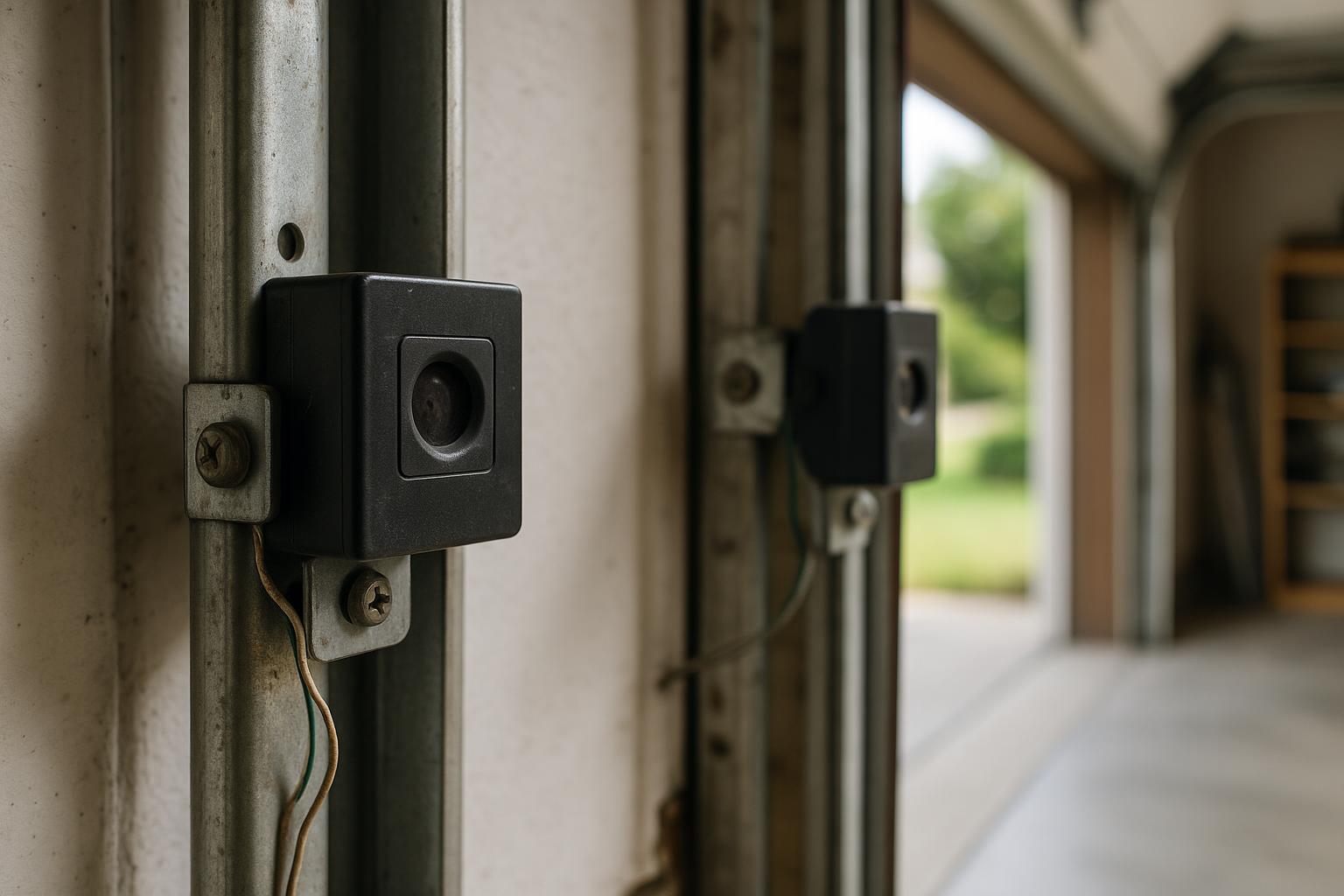
- Photo-eye sensors: These are the small sensors mounted near the bottom of your garage door tracks on either side. They send an invisible beam across the opening. If something breaks that beam — a child, a pet, a bicycle — the door reverses to prevent injury or damage.
- Auto-reverse mechanism: If the door encounters physical resistance while closing, it's designed to stop and reverse direction. This prevents the door from crushing objects or people beneath it.
Both of these features are critical safety components. But when they malfunction or get triggered incorrectly, they can cause your door to reverse even when nothing is actually in the way.
Common Causes of a Garage Door That Reverses Before Closing
1. Misaligned Photo-Eye Sensors
This is the number one reason we see garage doors reversing unexpectedly. The photo-eye sensors on either side of your garage door opening need to be precisely aligned to maintain their infrared beam. Over time, they can get bumped by a lawnmower, a trash can, a kid's bike, or even just vibrations from the door's daily operation.
When the sensors are misaligned, the opener thinks something is blocking the door's path and triggers the reversal. Most sensors have a small LED light — typically green when aligned and red or blinking when misaligned. Check both sensors to see if one of the lights is off or flickering.
2. Dirty or Obstructed Sensor Lenses
Charlotte's humid climate means dust, pollen, cobwebs, and moisture can accumulate on your sensor lenses surprisingly fast. Even a thin layer of grime can weaken the infrared beam enough to cause intermittent reversals. A gentle wipe with a soft cloth can sometimes solve the problem instantly.
3. Damaged Sensor Wiring
The wires running from your photo-eye sensors back to the opener unit can become damaged over time. Rodents may chew through them, staples holding the wire to the wall can pierce the insulation, or connections can corrode. If cleaning and realigning the sensors doesn't fix the issue, damaged wiring could be the culprit.
4. Incorrect Close-Force Settings
Your garage door opener has adjustable force settings that control how much power it uses to open and close the door. If the close-force setting is too low, the opener may interpret normal friction in the tracks as an obstruction and reverse the door. This sometimes happens after a spring replacement or when temperature changes cause the door's components to expand or contract.
5. Worn or Damaged Tracks
Bent, rusted, or misaligned tracks can create resistance that triggers the auto-reverse mechanism. Run your eye along both tracks from top to bottom and look for obvious bends, dents, or gaps. Even a small bend can cause enough friction to make the opener think something is wrong.
6. Broken or Worn Springs
Your garage door springs do the heavy lifting — literally. They counterbalance the weight of the door so the opener doesn't have to work as hard. When a spring is weakening or broken, the door becomes significantly heavier, and the opener may not have enough force to push it all the way down. It struggles, senses resistance, and reverses. If you notice your door seems heavier than usual or you heard a loud bang from the garage recently, a broken spring is likely the issue.
7. Something Actually in the Way
It sounds obvious, but it's worth mentioning. Small objects near the sensor beam — a leaf blowing across the opening, a spiderweb catching the light just right, or even direct sunlight hitting the sensor at a certain angle — can trigger a reversal. We've seen homeowners in Matthews and Mint Hill troubleshoot for hours before realizing afternoon sun was the problem.
What You Can Safely Fix Yourself
Some of these issues are straightforward enough for a handy homeowner to address:
- Clean the sensor lenses with a soft, dry cloth.
- Realign the sensors by gently adjusting them until both indicator lights are solid.
- Clear any debris from the area around the sensors and along the tracks.
- Check for obvious obstructions in the door's path.
These simple steps resolve the problem for many homeowners. If they don't, it's time to call in a professional.
When to Call a Professional
Some causes of garage door reversal involve components that can be dangerous to work with or require specialized knowledge to adjust properly:
- Spring replacement: Garage door springs are under extreme tension. Attempting to replace or adjust them without proper training and tools can result in serious injury. This is not a DIY job.
- Force and travel adjustments: While some openers have simple dials for these settings, getting them wrong can create safety hazards or cause additional damage to the opener.
- Track repair or realignment: Bending tracks back into shape requires specific tools and technique. A poorly repaired track can cause the door to come off its tracks entirely.
- Wiring issues: Electrical troubleshooting should be handled by someone who understands the system to avoid creating new problems or safety risks.
At Charlotte Garage Door Service, we diagnose the actual cause before recommending any repairs. We serve homeowners and businesses across Charlotte, Concord, and the surrounding communities, and we believe in honest assessments — not upselling parts you don't need.
Prevent Future Issues with Regular Maintenance
Most garage door reversal problems are preventable with basic maintenance. We recommend homeowners do a quick visual inspection of their sensors, tracks, and springs every few months. Lubricating the moving parts twice a year and testing the auto-reverse function monthly can help you catch small issues before they become bigger headaches.
If you'd rather leave it to the professionals, our maintenance service covers all of this and more. We'll inspect every component of your garage door system, make adjustments as needed, and let you know if anything is showing signs of wear.
Get It Fixed Right the First Time
A garage door that won't stay closed isn't just annoying — it's a security risk and an invitation for pests, weather, and unwanted visitors. If you've tried the basic troubleshooting steps and your door is still reversing, give Charlotte Garage Door Service a call. We show up on time, explain what we find, and fix the problem so you can get back to your day.